
Shore Diving vs Boat Diving: Which Fits?

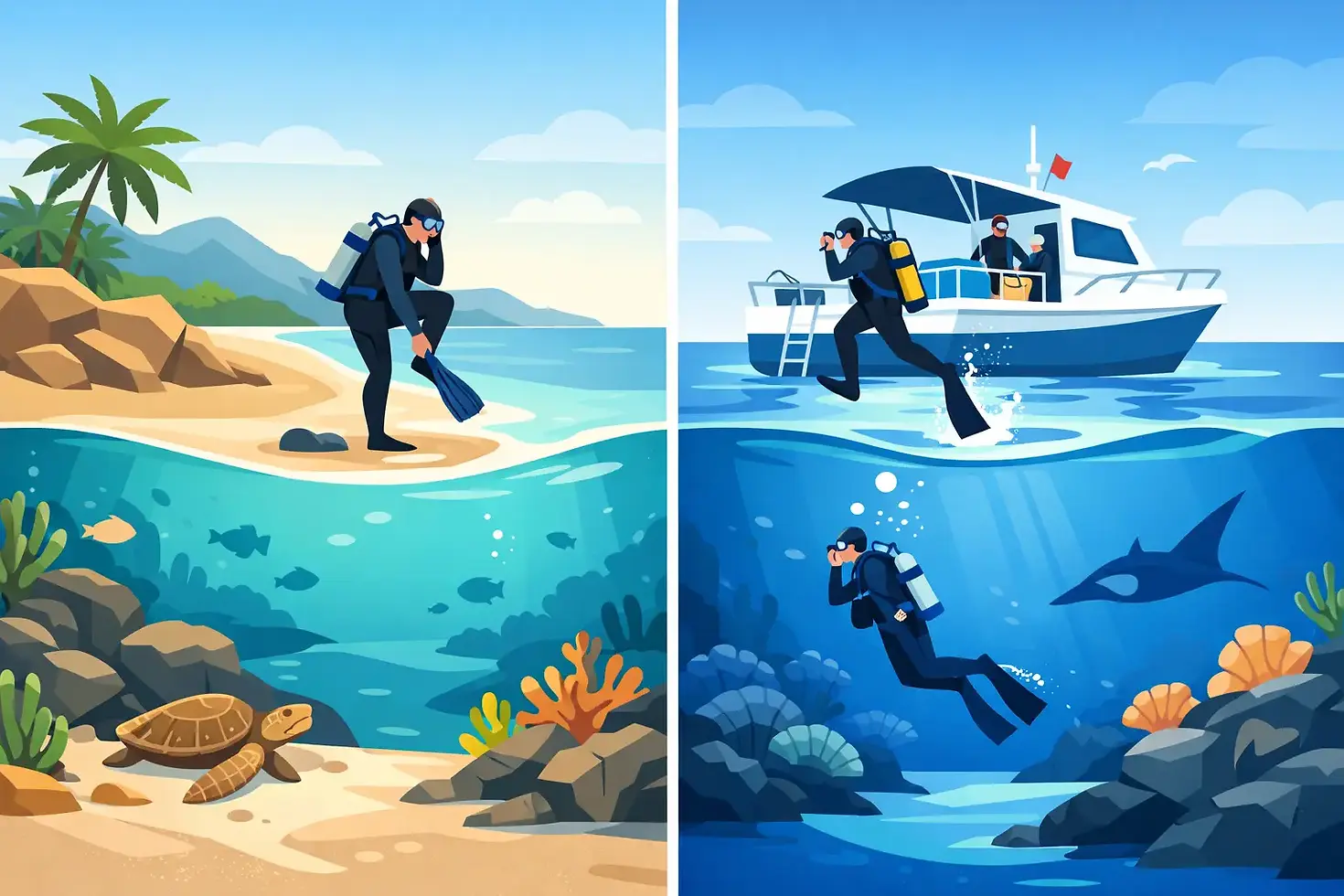
Some dives begin with a giant stride off a boat into blue water. Others start with a careful walk from the beach, fins in hand, watching the shoreline and timing your entry. That is the real heart of shore diving vs boat diving - not which one is better on paper, but which one gives you the right mix of access, comfort, challenge, and underwater payoff for the kind of diver you are right now.
If you are planning dives in a place like Qatar, this choice matters even more. Local conditions, site access, currents, visibility, and your experience level all shape whether a shore entry feels easy and rewarding or whether a boat is the smart move. Join the tribe and let’s break it down the way divers actually talk about it - honestly, practically, and with safety first.
Shore diving vs boat diving: the real difference
The simplest difference is access. Shore diving starts from land. You gear up near the beach or shoreline, enter the water from shore, and swim out to the site. Boat diving uses a vessel to take you directly to a dive location, often farther offshore, where you enter from the boat and return to it after the dive.
That sounds straightforward, but the experience underwater and above it can be very different. Shore diving usually gives you more control over the pace. You can often take your time gearing up, plan a gradual descent, and stay closer to a clear exit point if conditions are calm. Boat diving often opens the door to sites you simply cannot reach from land, including deeper reefs, isolated structures, and offshore wrecks.
Neither option wins every time. The better choice depends on what you want from the dive and what conditions are doing that day.
Why many divers love shore diving
Shore diving has a loyal following for good reason. It can feel more independent, more relaxed, and often more budget-friendly. For newer divers, that extra sense of control can make a huge difference. There is no hurry to roll in with a group, no ladder to climb immediately after a dive, and no concern about feeling uneasy on a moving boat.
A good shore dive can also be an excellent training ground. You learn navigation, buoyancy, surf entry techniques, and situational awareness in a very direct way. You are reading the water before you even descend. That builds real diver confidence.
For local divers and expats who want to get in the water regularly, shore diving can be especially appealing. If the site is accessible and conditions are suitable, it is a practical way to log dives, refine skills, and stay active without committing to a full offshore trip every time.
That said, shore diving asks more from you physically at the start. You may need to carry gear over sand, rock, or uneven ground. Entries and exits can be the hardest part of the entire dive, especially with waves, current, or slippery footing. A site that looks easy from shore can become technical very quickly if the surface conditions shift.
Why boat diving opens up more adventure
Boat diving is where many divers start to feel the scale of a destination. Instead of swimming out from land and hoping the site develops, you are dropped much closer to the action. That can mean healthier reefs, stronger marine life encounters, and access to sites that are simply out of range for shore divers.
This is also where destination diving becomes more exciting. Offshore sites often offer cleaner lines, less surface effort before descent, and a stronger sense of discovery. Wrecks, deeper structures, and isolated patches of reef are often best reached by boat.
For beginners, boat diving can actually feel easier than shore diving once they are comfortable with the platform. You skip the beach entry, avoid walking through surf, and often descend on a line or with a guide directly onto the site. For many people, that is less stressful than managing fins, waves, and navigation from shore.
But boat diving comes with its own demands. Seasickness is real. Timing matters more. Group logistics are tighter. You need to listen carefully to the briefing, follow the boat procedures, and stay aware of pickup protocols. If conditions offshore build up, the ride itself can become part of the challenge.
Shore diving vs boat diving for beginners
If you are new to scuba, the right answer is usually not about ego. It is about the environment that gives you the calmest, safest, most confidence-building first experiences.
A protected shore site with an easy entry can be fantastic for beginners. It allows for a gentler setup, simple descents, and the chance to focus on breathing, buoyancy, and comfort in the water. Instructors also have a bit more flexibility to pace the session without boat schedules driving the day.
At the same time, some beginner-friendly boat dives are easier than many shore dives. If the shoreline is rocky, the surf is active, or the swim out is long, a boat may be the better and safer option. The key is not whether it starts on land or from a deck. The key is how manageable the conditions are for your current level.
That is why guided local knowledge matters so much. A professional dive team can look at weather, currents, and your comfort level and tell you honestly which option sets you up for success.
Which one is better for certified and advanced divers?
Certified divers often start choosing based on goals. If your priority is skill refinement, photography in shallow water, or easy repeat dives, shore diving can be ideal. It gives you more repetition and often more freedom to focus on technique.
If your goal is bigger site variety, deeper profiles, wreck exploration, or reaching the best marine hotspots, boat diving usually takes the lead. Advanced divers, especially those pursuing deep, wreck, nitrox, or technical pathways, often need boat access to make those dives possible.
This is where a destination like Qatar gets interesting. Some of the most compelling underwater experiences are not sitting right off the beach waiting for a casual swim out. Offshore access can reveal a completely different side of the Gulf. For divers ready to go beyond entry-level sites, boat diving often expands the map in a big way.
Cost, comfort, and time: the trade-offs people forget
A lot of divers frame the decision around adventure alone, but real-world choices usually come down to cost, comfort, and schedule.
Shore diving is often less expensive because there is no boat operation involved. It can also be more flexible, especially for quick local sessions. If you want a shorter dive window or a simple guided outing, shore access can be efficient.
Boat diving usually costs more, but that extra cost is paying for transport, crew support, site access, and often a more premium overall experience. For travelers with limited time, that can be worth every bit of it. Instead of spending energy reaching a site from shore, you arrive closer to the best part.
Comfort is personal. Some divers hate carrying gear across a beach but love boat entries. Others would rather walk into the sea than spend an hour on choppy water. Be honest with yourself. The best dive plan is the one that keeps you calm, capable, and excited to go again.
Safety is different, not optional
Shore and boat diving both demand strong safety habits, but the risk profile changes.
With shore diving, entries and exits are often the critical moments. You need to watch waves, assess footing, protect your gear, and conserve energy. Navigation also matters more, because you need to return to a specific exit point.
With boat diving, the focus shifts toward briefing discipline, entry procedures, ascent control, and staying visible and recoverable at the surface. Surface conditions can feel very different offshore than they do from the marina or beach.
This is exactly why diving with a professional, safety-driven operator matters. Good teams do not just take you to the water. They match the site to the diver, watch conditions closely, and know when to change the plan. That is how confident diving is built.
So which should you choose?
Choose shore diving if you want a more affordable, controlled, skills-focused session and the site conditions are friendly. Choose boat diving if you want broader site access, a more immersive adventure, and the chance to reach places shore entries cannot.
The smartest divers do both. They treat shore dives as part of building comfort, consistency, and technique, and they use boat dives to expand their range and experience the standout sites of a destination. That is not playing both sides. That is simply becoming a more complete diver.
At Nomadik Hub, that mindset is part of the culture. Some days call for simple, solid local diving. Other days call for heading offshore and seeing what waits beyond the shoreline. Either way, the goal is the same - dive well, dive safely, and keep growing.
If you are deciding between your first shore dive and your first boat trip, do not chase what sounds more impressive. Choose the option that matches your conditions, your training, and your confidence today. The ocean is not going anywhere, and the best dive is the one that leaves you wanting the next one.


Comments